A Religion for Radiation

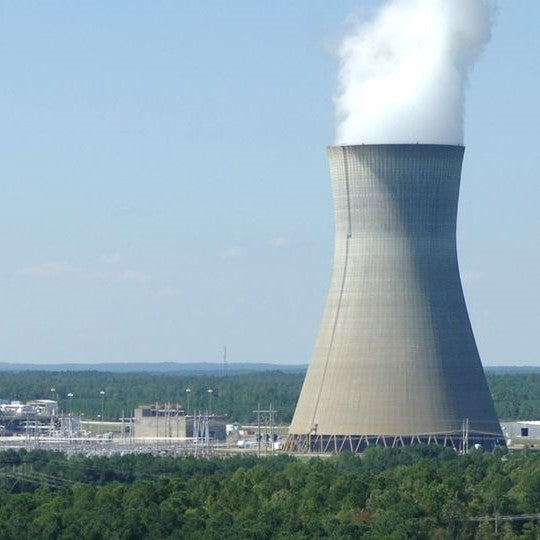
A cooling tower at a nuclear power plant. Plants like these produce nuclear waste that can potentially pose a hazard to future humans. (Source: Duke Energy)
Fears of radiation are well known in our culture, from science fiction stories of nuclear mutation, to practical concerns of nuclear meltdowns and fallout. However, it’s rare that we think of the far future when it comes to radiation which is ironic given nuclear materials' long contamination period. Sites like Chernobyl won’t be safe to inhabit for thousands of years. How then are we to communicate this threat into the far future, when all modern languages are extinct?
Nuclear semiotics is a field dedicated to just that, creating symbol systems to dissuade future humans away from radioactive fallout or nuclear waste sites. Many ideas have been proposed, from simple pictographic images of stick figures sickening from radiation, to inventing a new religion centered around warning away our descendants from radioactive hotspots.
The atomic priesthood is a proposed religious order that would create rituals and myths warning our future descendants away from such sites, to be passed on into the far future. The idea is to rely on a system that doesn’t require our descendants to have a scientific understanding of how radiation works. Instead, it would rely on more basic human behavior of mythmaking and storytelling to keep future generations safe.
The idea is not without its controversies, but the elaborateness of the proposal reminds us of the challenge we face in dealing with the long term effects of radiation. The atomic priesthood will likely never exist, but the fact that we could need it is perhaps a reminder of the steps we need to take to ensure the safety of future generations.


Featured Product
Joe Frazier Boxing Glove
Latest News
-
 Nov 01, 2025 Is “Paul is Dead” Dead?: Unpacking One Of Pop Culture’s Most Enduring Conspiracy Theories Read More
 -
 Oct 31, 2025 Scientists Discover Hooves and Skin in Preserved Dinosaur "Mummies!" Read More
 -
 Oct 27, 2025 Scientists Record a Bat Catching Birds Mid-Flight! Read More
 -
 Oct 09, 2025 Scientists Discover First Fossilized Leech! Read More
 -
 Oct 01, 2025 Researchers Recreate Dinosaur Sounds Using Bizarre Instrument! Read More
 -
 Sep 19, 2025 The House that Ruth Built: The Story of the Old Yankee Stadium Read More
Cool Things!


Is “Paul is Dead” Dead?: Unpacking One Of Pop Culture’s Most Enduring Conspiracy Theories


Scientists Discover Hooves and Skin in Preserved Dinosaur "Mummies!"
A dinosaur discovery just in time for Halloween! In a new analysis of a group of fossils from Wyoming, Scientists have determined this group of fossils are dinosaur “mummies,” with preserved skin and even hooves.


Scientists Record a Bat Catching Birds Mid-Flight!
Bats, birds, screeches, oh my! In a reverse-Hitchcock twist, a new study reveals that a species of European bat catches and eats birds mid-flight.
Specimen Deep Dives


The House that Ruth Built: The Story of the Old Yankee Stadium


The Queen of the Skies: the Story of the Boeing 747


Old Ironsides: The USS Constitution and the Start of the U.S. Navy
Long Form Articles


The Artist Behind the Macintosh: Susan Kare and Apple Computers
While the two Steves, Jobs and Wozniak, are the most well known faces behind Apple computers, equally important to the products and culture of the company were those who crafted the experience of using their computers through design. The most notable of these visual architects was Susan Kare, a designer responsible for “humanizing” Macintosh computers.


Can I Lick It? Yes You Can!
Have you ever been unable to tell if a fossil was really a fossil, but you were too embarrassed to admit it? Have you ever wanted to lick a fossil just because, but you didn’t want to risk judgment from your peers? Well, good news! You can kill two birds with one stone! Licking a fossil can actually help you determine if it’s the real deal or just another rock.


Is It Legal To Own a Meteorite: How to Start Your Outer Space Collection!
Meteorites are some of the rarest geological specimens to be found on Earth. Of course, since these stones are not of our world, purchasing them can sometimes be a confusing process. Is it legal to own a meteorite? In short, yes! Read on for help starting your cosmic collection!