Elephant Bird Eggshell Fragment

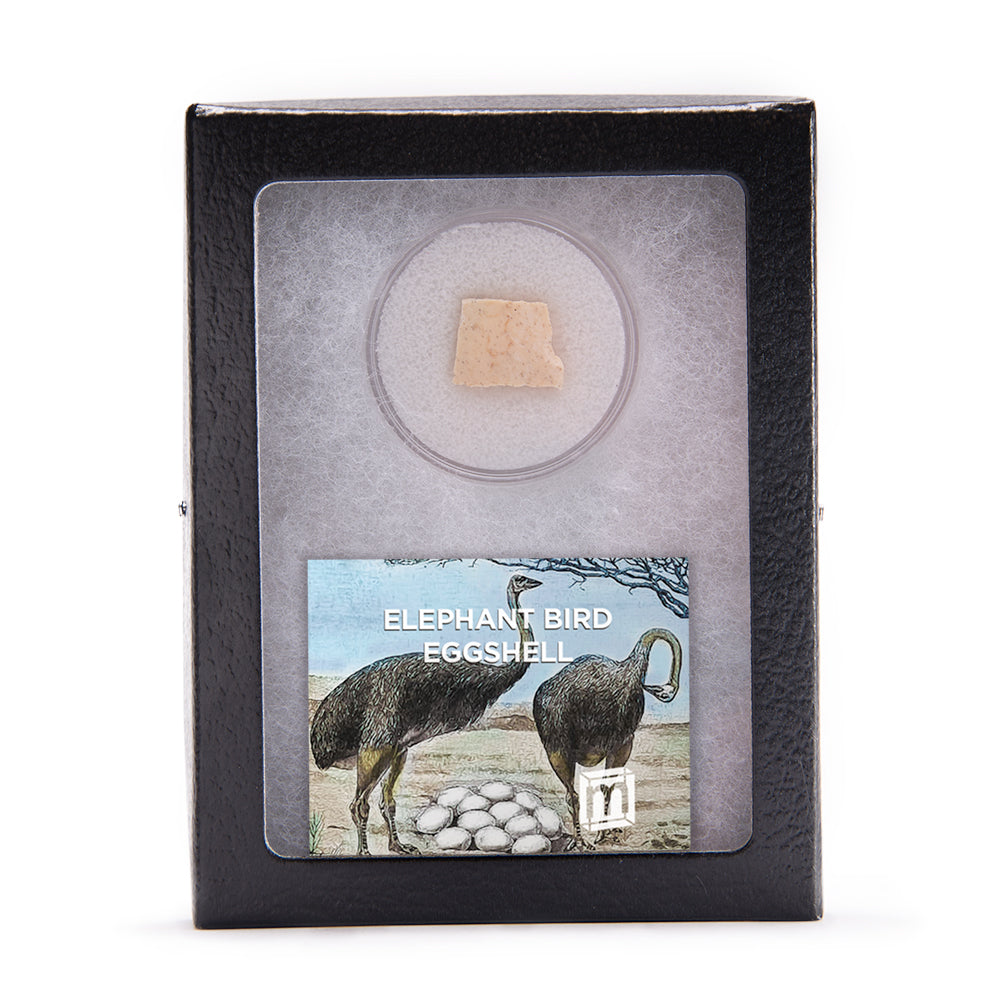



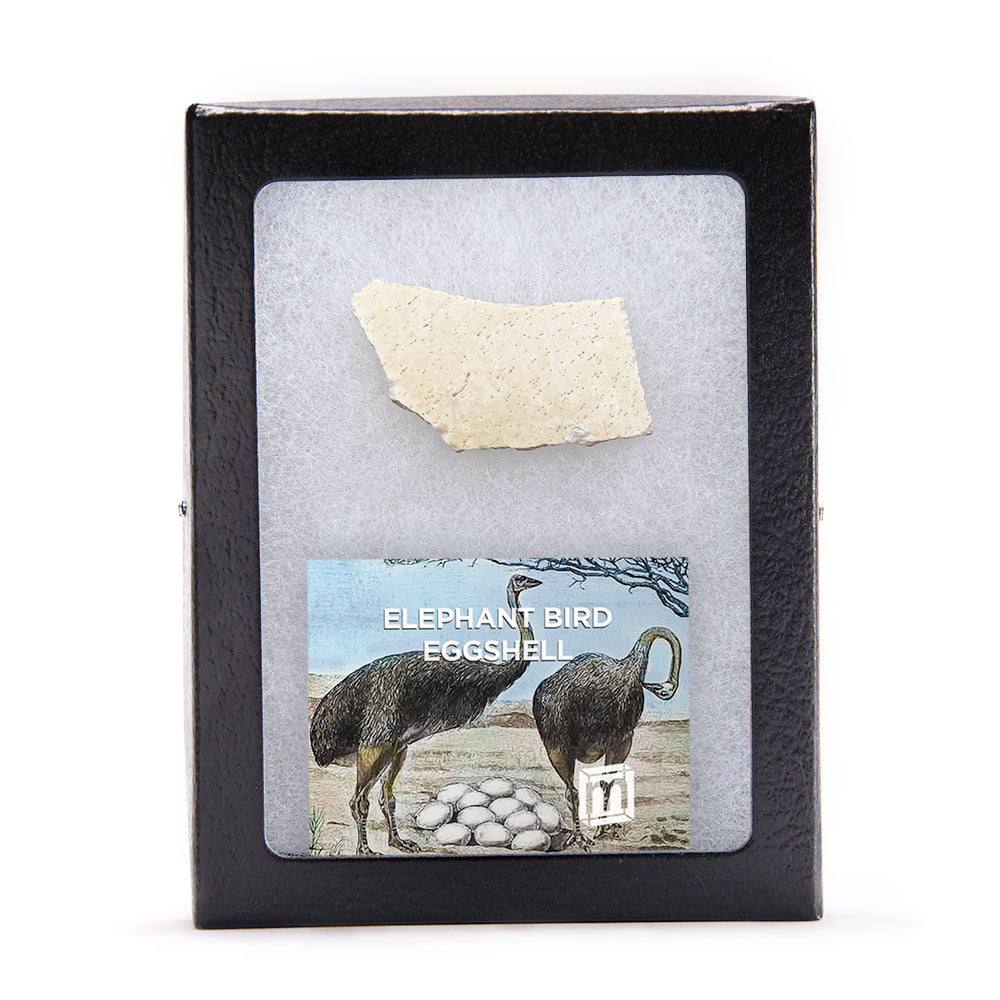
Elephant Bird Eggshell Fragment
The island of Madagascar was the home of the now extinct Aepyornis, better known as the Elephant Bird. While these creatures themselves were massive, with some growing to 10 feet tall, their eggs were a spectacle to scientists. The largest known egg of any vertebrae, including dinosaurs, an Elephant Bird egg could have a volume as large as 1.9 gallons.
Originally featured in the Fourth Edition of the Mini Museum, we are proud to present it in add-on form!
Please Note: This item is in very short supply and it is uncertain whether we shall have it again once it is sold out. Please limit your purchase to one (1) specimen per household in order to share with others. Thank you!


📸 Large Elephant Bird Eggshell Fragments
Island Giants
The Elephant Bird was the largest member of an extinct family of flightless birds native to the island of Madagascar. As some individuals stood nearly 10 feet tall (3m) and weighed upwards of 1,100 pounds (500kg), it should come as no surprise that these massive birds also laid the largest eggs of any known bird species, with volumes approaching 1.9 gallons (7L).


📸 Small Elephant Bird Eggshell Fragments
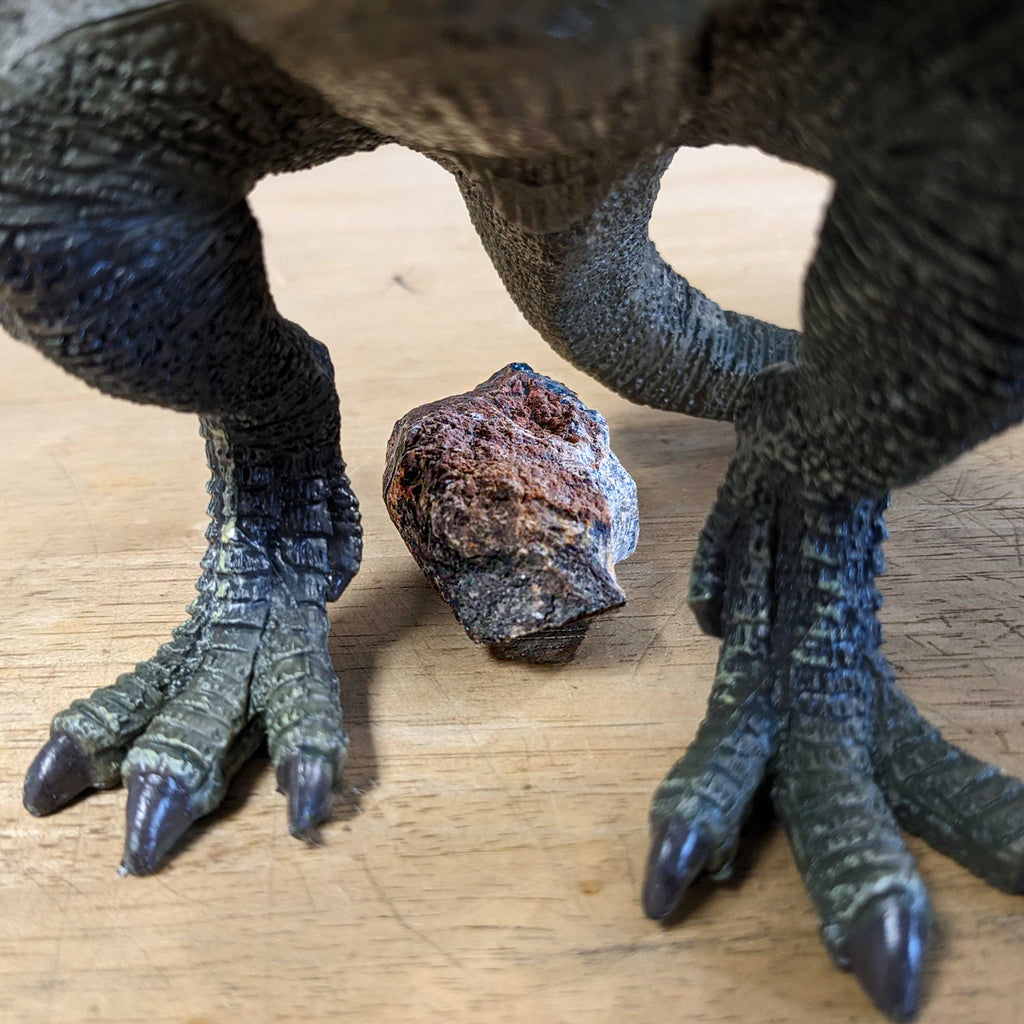
This specimen is a fragment of an Elephant Bird Eggshell obtained from a private collection. Each fragment is unique.
Elephant Bird Eggshell Sizing
Small - Approximately 0.75"
Large - Approximately 1.5"
Both sizes come in our classic, glass-topped riker display cases. The cases measure 4"x3"x1". A small information card is also included, which also serves as the certificate of authenticity. As pictured, the Small specimen is enclosed in an acrylic specimen jar.


"So why did the Elephant Bird disappear? I suspect it was these.... its eggs. People may not have been able to tackle an adult bird but they could take its eggs which were a huge source of nourishment." ~ Sir David Attenborough
MORE ABOUT THE ELEPHANT BIRD


📸 An elephant bird skeleton
A Giant is Born
Aepyornis, popularly known as the Elephant Bird, was the largest member of an extinct family of flightless birds native to the island of Madagascar. Some individuals stood nearly 10 feet tall (3m) and weighed upwards of 1,100 pounds (500kg).
Elephant-bird eggs outsize any other bird eggs known, with volumes approaching 1.9 gallons (7L). At 160 times that of an average chicken, these are the heftiest eggs of any vertebrate, including dinosaurs.
Such imposing figures may conjure ideas of an enormous ostrich or even the savage "terror bird" of the Late Paleocene, but researchers believe that these giants were more like their distant (and much, much smaller) cousins, the kiwi. Given their physical bulk, scientists believe they moved slowly through the forests of Madagascar, browsing and splitting tough fruits with their heavy, pointed bills, until their extinction approximately 1,200 years ago.

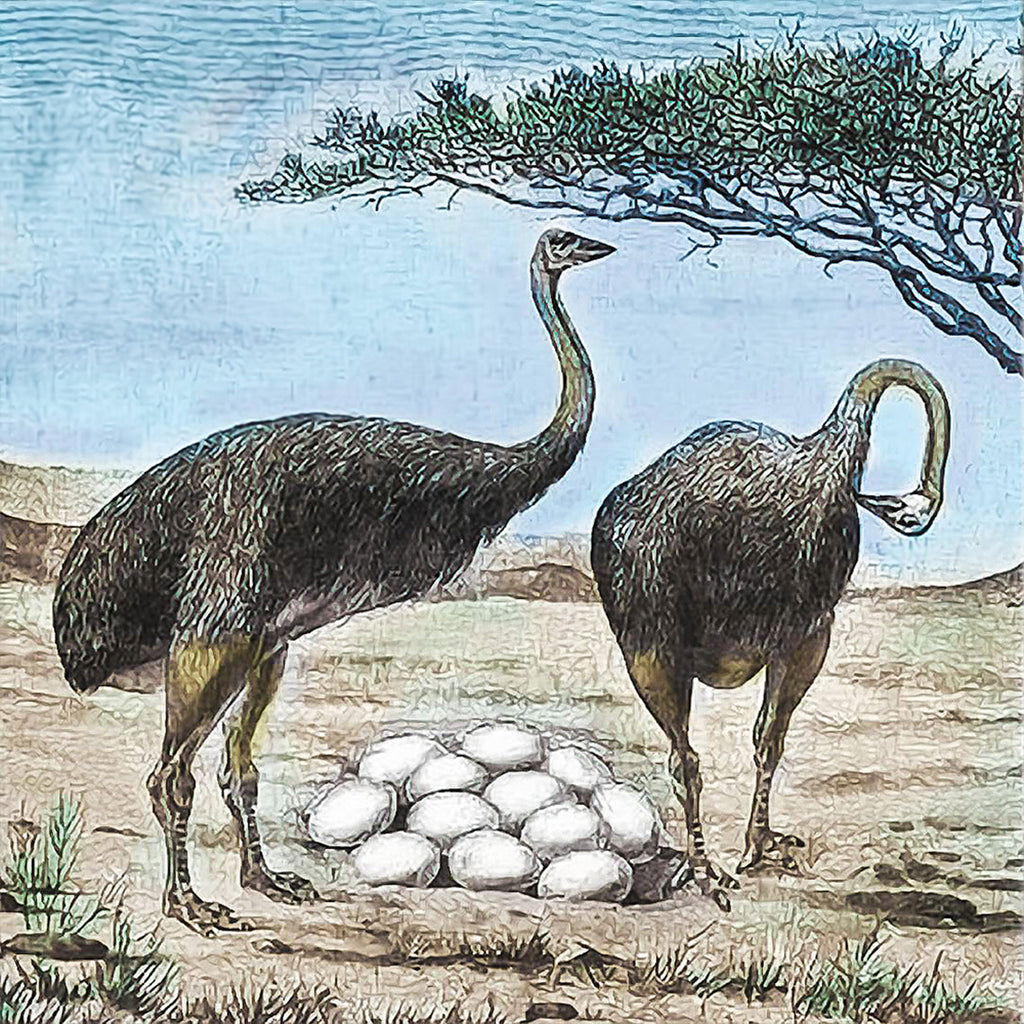
📸 Nesting Aepyornis illustration, Scientific American Supplement No. 1308, January 26th, 1901
Coastal concentrations of Elephant Bird eggs raise the possibility that Aepyornis nested communally. Eggs and juvenile elephant birds may have been vulnerable to now extinct predators, such as giant fossa or the Malagasy crowned eagle. Yet given their size, adults likely had little to worry about from other creatures—except, perhaps, human beings.
One common theory for the disappearance of elephant birds is the arrival of humans in Madagascar some 2,000 years ago. Fragments of elephant-bird eggs have been found in archaeological sites; some elephant-bird bones show the scoring of knives. Some scientists question this hypothesis, suggesting such evidence for human hunting of elephant birds is sparse, but it would be difficult to question the nutritional value of such an enormous egg.


📸 Aepyornis Egg Comparison, Scientific American Supplement No. 1308, January 26th, 1901
The agent or agents of extinction for the elephant bird are not entirely known; neither is the exact period of their disappearance. In 1658, a French colonial governor of Madagascar, Etienne de Flacourt, made an intriguing reference to an enormous bird, the vouropatra, inhabiting remote portions of southern Madagascar, which suggests that at least one species of Aepyornis maybe survived a bit longer.
"A large bird, called the 'vouropatra' haunts the Ampatres. It lays eggs like the ostriches; but in the loneliest places so that the people of these places may not take them."


Front of the Specimen Card


Back of the Specimen Card
Further Reading
Hume, Julian P. Extinct Birds. Bloomsbury Publishing Plc, 2017.
Mayr, Gerald. Avian Evolution: The Fossil Record of Birds & its Paleobiological Significance. John Wiley & Sons Ltd, 2017.
Mitchell, Kieren J. et al. “Ancient DNA Reveals Elephant Birds & Kiwi Are Sister Taxa & Clarifies Ratite Bird Evolution.” Science, vol. 344, 2014, pp. 898-900.
Balanoff, Amy M., and Timothy Rowe. “Osteological description of an embryonic skeleton of the extinct elephant bird, Aepyornis (Palaeognathae: Ratitae).” Journal of Vertebrate Paleontology 27.S4 (2007): 1-53.
Day, David. The doomsday book of animals: a natural history of vanished species. Penguin Putnam, 1981.