Pliosaur Bone


Pliosaur Bone
With a length of over ten meters and razor-sharp teeth, the Pliosaur was a terror in the Jurassic ocean. It had its choice of options when devouring prey: swallow them whole with its massive mouth or tear them apart with its reinforced jaws. With these advantages, this aquatic reptile ruled the seas for 110 million years across the Mesozoic Era.
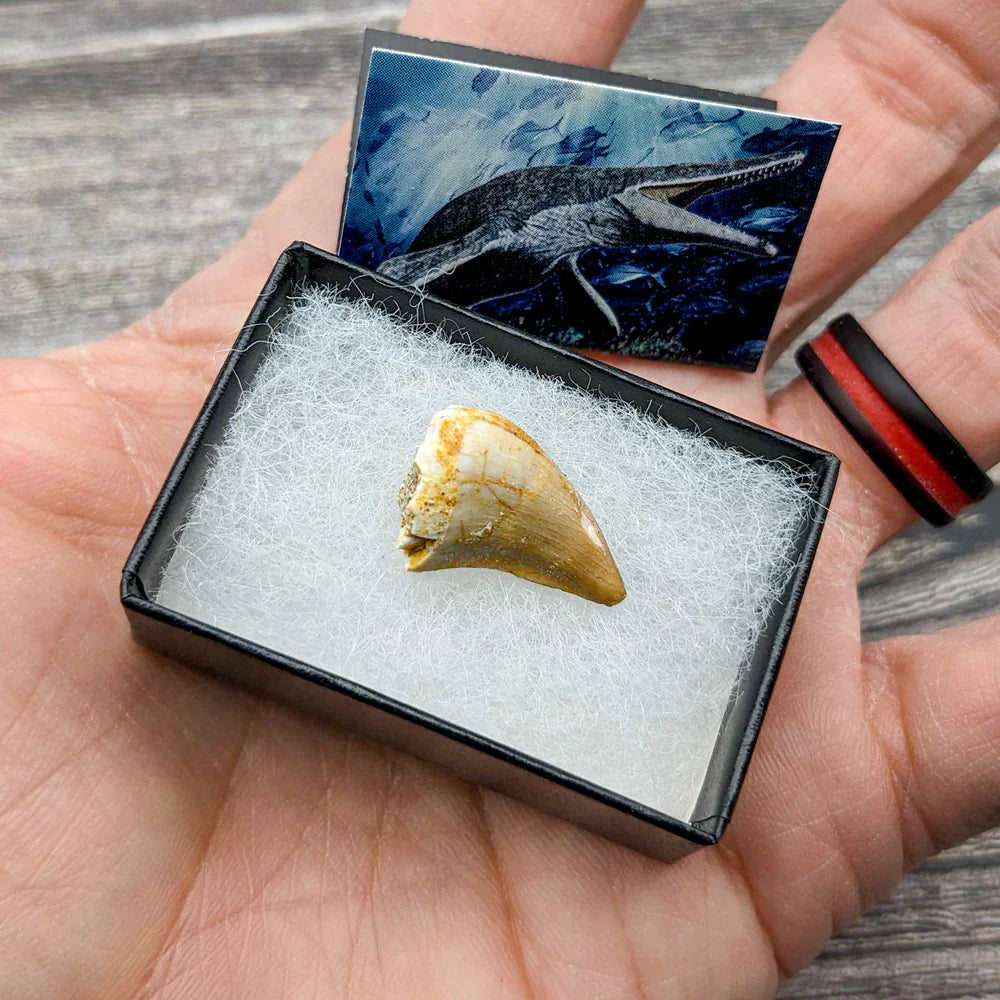
This specimen is a piece of fossilized Pliosaur bone, recovered from the Lower Oxford Clay in Cambridgeshire, England. It dates back over 160,000,000 years old to the Jurassic Period, by which time Pliosaur had established itself as a terrifying predator of the seas. The fossil ships with a photo card which serves as statement of authenticity.


10 METERS OF TERROR
Across the Mesozoic Era, many aquatic reptiles hunted and skulked, but few seem better suited to the job than the Pliosaur. These aquatic predators boasted large skulls and short necks, an efficient body plan that allowed for quick movements.
Inside their skulls was the real threat: sharp, curved teeth positioned to clamp down on large prey and hold them in place. With two specialized muscle groups in their jaws, Pliosaurs could hold on tight until their prey was defeated. With these attributes, the Pliosaur thrived for 110 million years across the Mesozoic.


This specimen is a piece of Pliosaur fossil bone, measuring 1-1.25". The fossil comes from the Lower Oxford Clay in Cambridgeshire, England, and dates to the Middle Jurassic Period, when Pliosaurs were first beginning to swim through the world's oceans.
All specimens are enclosed in a handsome, glass-topped riker box case measuring 4x3x1". It comes complete with an informational card that serves as statement of authenticity. You can also explore more aquatic reptile fossils in the collection below!






Plesiosaur Tooth - Classic Riker Box Specimens


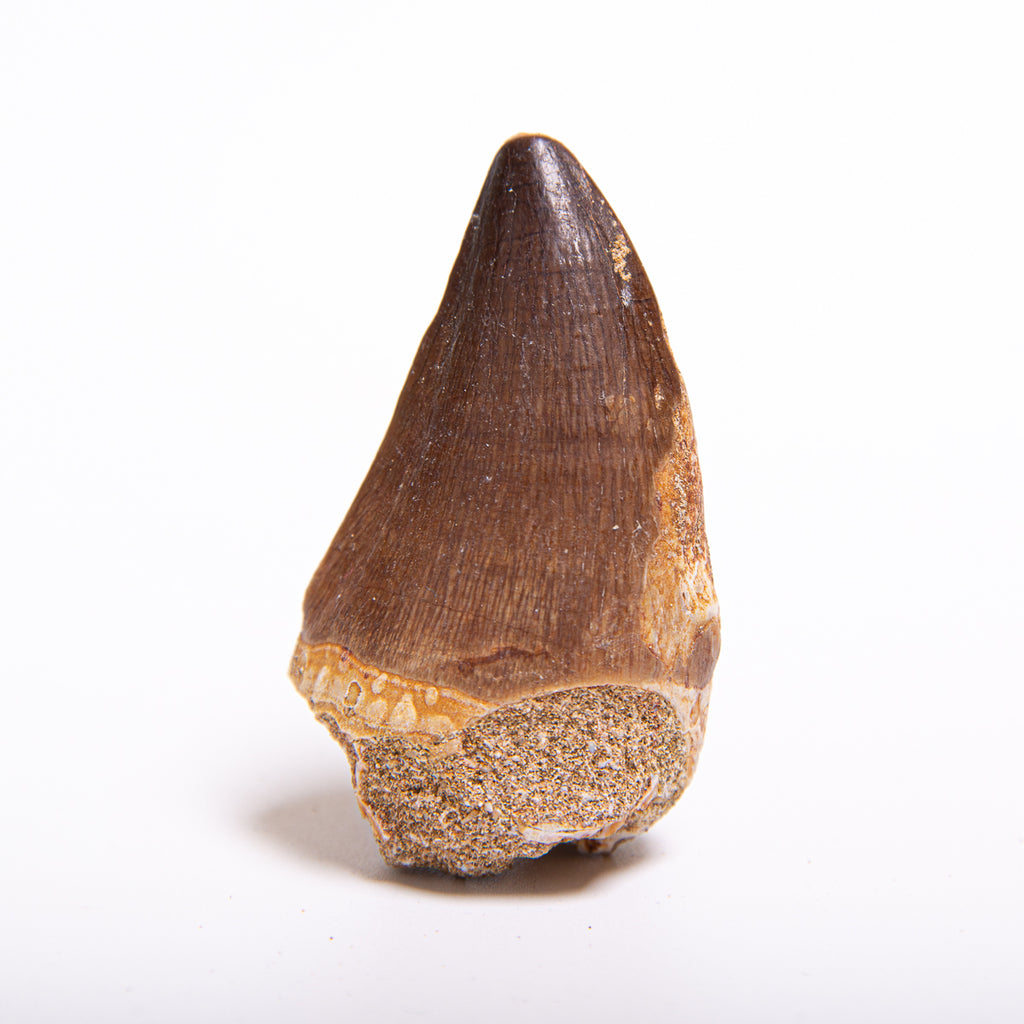
Plesiosaur Tooth in Matrix - 1.82"


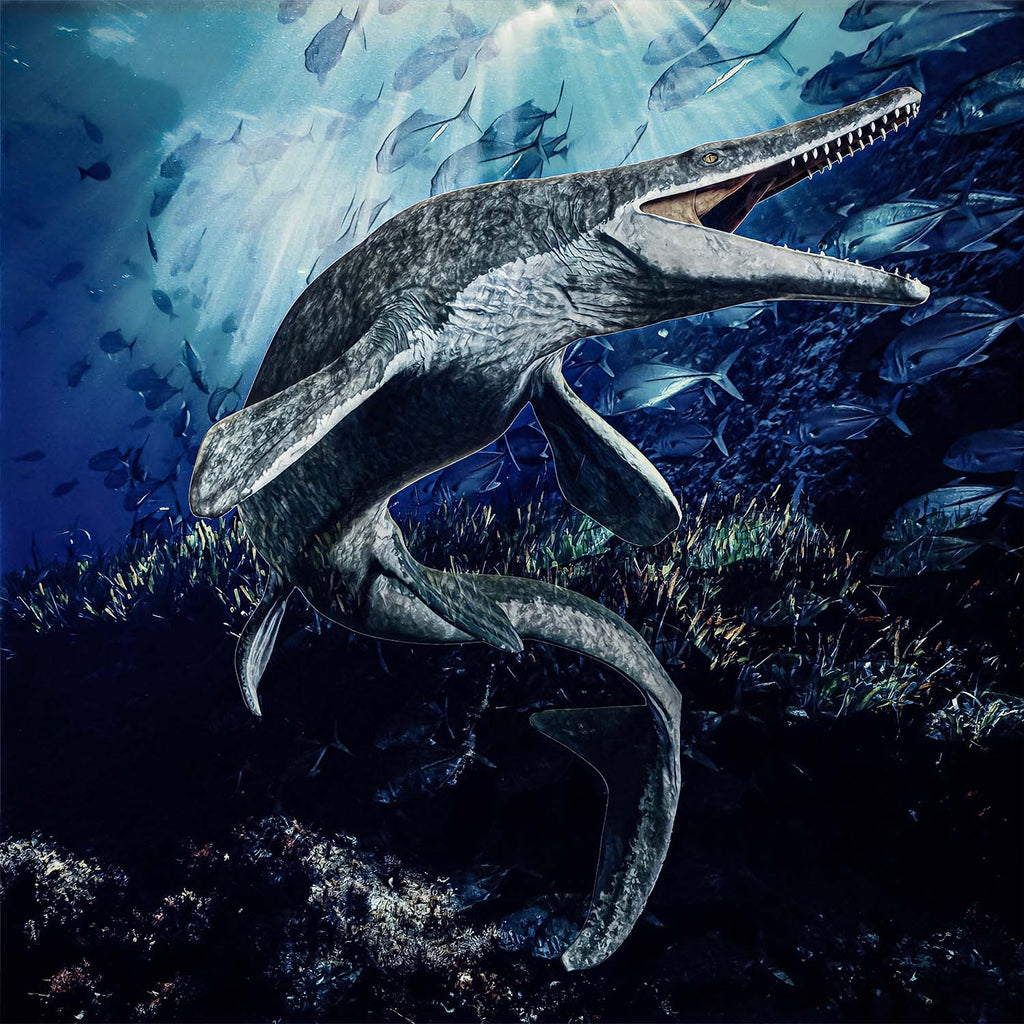
📸 PLIOSAURUS PALEOART
MORE ABOUT PLIOSAURUS


📸 PLIOSAURUS SKULL RECONSTRUCTION
A HARD-HEADED PREDATOR
With a short neck and a large skull full of teeth, the Pliosaur had an efficient body plan that allowed it to spread across the world’s oceans, from the Early Jurassic Period to its extinction at the end of the Cretaceous Period, a span in the fossil record of over 110,000,000 years. Measuring up to over 30 feet long, Pliosaurs were big enough to swallow prey whole, which may have been a small mercy considering the animal’s deadly teeth and powerful bite force.
Pliosaur fossils have been found all over the world, appearing across North America and in England’s Kimmeridge Clay Formation, where the first such fossil was discovered in the early 19th century. These finds show a great degree of diversity among Pliosaur species, but the animals show little ecological variation, always seeking out similar environments where they could dominate prey.


📸 PLIOSAURUS KEVANI TEETH
Inside each Pliosaur skull were dozens of hooked teeth concentrated towards the front, allowing the Pliosaur to latch onto large prey and prevent them from escaping. In this, the animal was aided by its powerful jaw muscles. Pterygoideus musculature allowed Pliosaurs to quickly open and close their mouths against the resistance of water, while the main adductor mass allowed those jaws to remain sealed around prey.
A reinforced cranial skeleton was well-suited to handle the added stress from these powerful bites, allowing the animal to tear into just about anything that came its way. Preserved stomach contents suggest an opportunistic hunter that preyed on cephalopods, fish, and other aquatic reptiles. Its large eyes and nonspecialized ears suggest it was a visual hunter that picked its prey out from a distance before charging in.
Further Reading
Benson, Roger B J et al. “A Giant Pliosaurid Skull from the Late Jurassic of England.” PloS one 8.5 (2013): e65989–e65989. Web.
O’Gorman, José P, Zulma Gasparini, and Luis A Spalletti. “A New Pliosaurus Species (Sauropterygia, Plesiosauria) from the Upper Jurassic of Patagonia: New Insights on the Tithonian Morphological Disparity of Mandibular Symphyseal Morphology.” Journal of paleontology 92.2 (2018): 240–253. Web.
SMITH, ADAM. S, and PEGGY VINCENT. “A New Genus of Pliosaur (Reptilia: Sauropterygia) from the Lower Jurassic of Holzmaden, Germany.” Palaeontology 53.5 (2010): 1049–1063. Web.
Taylor, Michael Alan, and A. R. I Cruickshank. “Cranial Anatomy and Functional Morphology of Pliosaurus Brachyspondylus (Reptilia: Plesiosauria) from the Upper Jurassic of Westbury, Wiltshire.” Philosophical transactions of the Royal Society of London. Series B. Biological sciences 341.1298 (1993): 399–418. Web.