Astronaut Mixtape - Skylab Mission-Flown Cassette Tape - Display Card


Astronaut Mixtape - Skylab Mission-Flown Cassette Tape - Display Card
Astronauts tend to keep busy during their missions, but even in outer space, there's still room for some downtime.
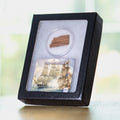
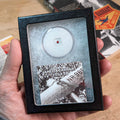
This specimen is a piece of magnetic tape from a cassette owned by astronaut Paul Weitz. It was brought to space and used for entertainment during Skylab 2, a mission undertaken to repair the damaged space station.
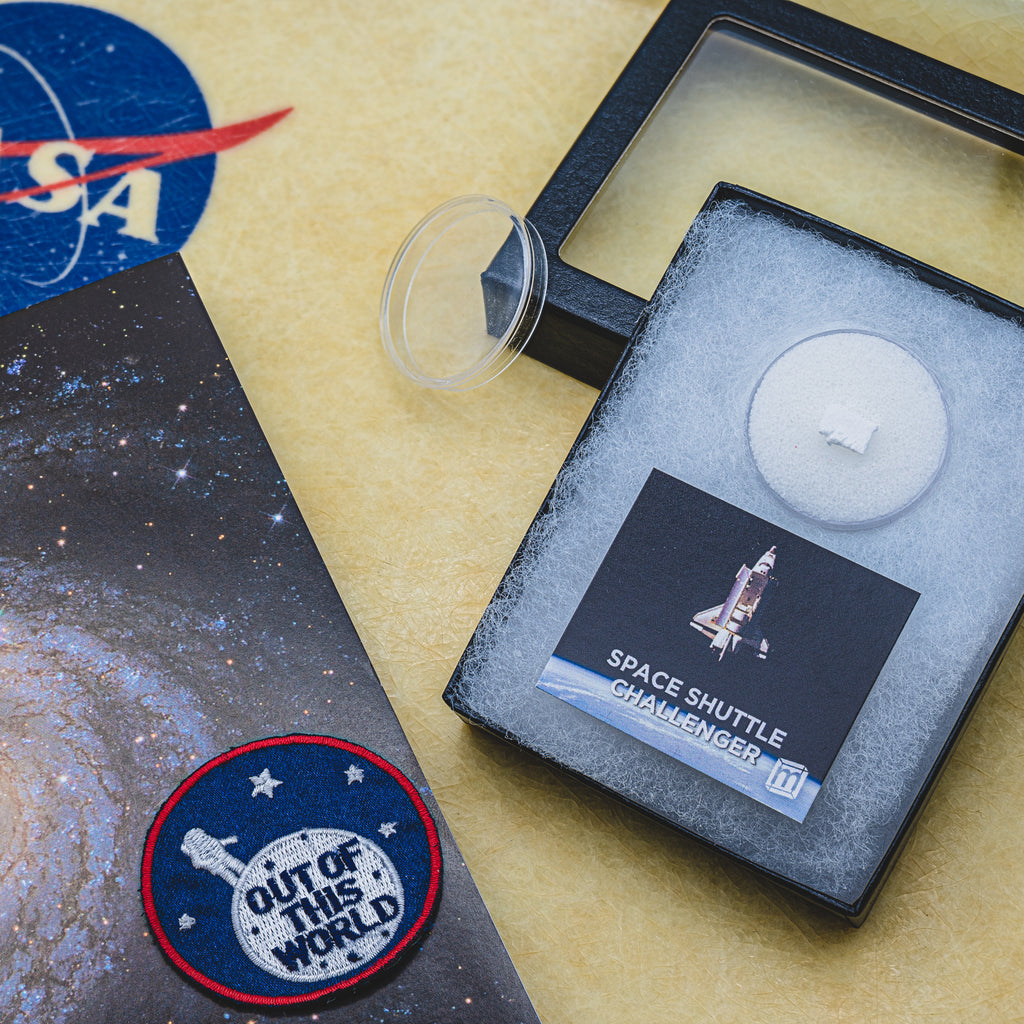
The cassette tape section has been sealed in resin and comes affixed to an informational card that includes the Mini Museum Seal of Authenticity.


Outer Space's Top Hits
Skylab was the first space station built by NASA, but the project nearly ended in disaster just as it began. Damage to the station's micrometeoroid shield and solar panels during deployment necessitated a repair mission designated Skylab 2, crewed by astronauts Charles Conrad, Joseph Kerwin, and Paul Weitz.
During their downtime, the Skylab mission astronauts listened to music and read paperback books. Of the three, it’s fair to say that pilot Paul Weitz had the most eclectic taste, mixing Sons of the Pioneers, Johnny Cash, the Mormon Tabernacle Choir, Beethoven, Henry Mancini, Andy Williams, Wayne Newton, and Pat Boone among his recordings.


This specimen comes from one of four mission-flown mixtapes that belonged to astronaut Paul Weitz. The cassette was acquired at auction and has been digitally preserved.
Each card comes with a section of cassette tape sealed in resin. The specimen is affixed to an informational card, which also serves as a certificate of authenticity.


📸 SKYLAB, 1974
MORE ABOUT SKYLAB


📸 SKYLAB CONCEPT ART
NASA'S FIRST SPACE STATION
An unmanned SkyLab launched on May 14, 1973. Unfortunately, just sixty seconds after takeoff, the Micrometeoroid Shield deployed early and crushed two of SkyLab’s solar panels. Mission Control put the space station into a barrel roll to turn its remaining solar panels towards the sun and generate as much electricity as possible. As temperatures inside the space station soared, there were concerns that the entire project might need to be scrapped.
With the fate of Skylab in jeopardy, the follow-up mission to activate the space station quickly became an emergency repair mission.


📸 JACK LOUSMA REPLACING THE MICROMETEOROID SHIELD
Spending nearly a month in space, the crew survived dangerous repair challenges, including a failed attempt to free the Micrometeoroid Shield with a ten foot pole while hanging out of the airlock. Inside the super-heated space station, temperatures reached 130F. Working in five hour blocks, the crew not only stabilized SkyLab they also completed all of the scientific objectives of the mission and set an endurance record for the longest human spaceflight.
Skylab was abandoned in 1974 as NASA focused resources on the Space Shuttle program. In 1978, intense solar activity heated the upper atmosphere and increased drag on Skylab. As a result, the space station fell back to Earth, ultimately crashing south of Perth, Australia in July of 1979
Further Reading
Weitz, P. J. “The role of man in conducting earth resources observations from space.” (1974).
Shayler, David. Skylab: America’s space station. Springer Science & Business Media, 2001.
Moye, J. Todd. SKYLAB: THE HUMAN SIDE OF A SCIENTIFIC MISSION. Diss. UNIVERSITY OF NORTH TEXAS, 2007.