Fossil Sponge - Astraeospongia meniscus - 419,000,000 Years Old


Fossil Sponge - Astraeospongia meniscus - 419,000,000 Years Old
Sponges are sessile filter feeders that thrive across the world's oceans. First appearing nearly 600 million years ago, sponges are the earliest complex lifeforms on the planet.
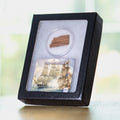
This specimen is a complete 1.5-2" Astraeospongia meniscus sponge fossil, preserved in beautiful detail. It was recovered on private land in Tennessee and dates to the Silurian Period over 419,000,000 years ago. Each specimen comes complete with an informational card that serves as certificate of authenticity.


THE OLDEST LIFE ON EARTH
Sponges are the oldest complex lifeforms on the planet, first appearing in the fossil record nearly 600 million years ago. Their efficient body plan allows them to flourish in aquatic environments all across the world.
Astraeospongia meniscus was identified by paleontologist Ferdinand von Roemer in 1860, with the sponge dating to the Silurian Period. The sponge’s curved meniscus shape suggests it lived in soft ocean bottoms, likely shallow water environments. This bowl shape was an effective adaptation to the sponge’s sessile lifestyle, allowing it to easily catch flowing water currents.
This specimen is a complete fossil sponge of the Astraeospongia meniscus species. Each specimen ships in a sturdy carton with an informational card that serves as certificate of authenticity. The sponges measure 1.5"-2".


📸 SPONGE FISHING (1897)
MORE ABOUT SPONGES


📸 Xestospongia testudinaria, a barrel sponge
Sponges are sea creatures that make up the Porifera phylum. They are the earliest multicellular organisms that still live today, first appearing 580 million years ago. So ancient are sponges that it is believed that their evolution marked the first break from the last common ancestor all living animals share. Sponges first appeared during the Paleozoic Era in shallow water environments before expanding across the world’s oceans. While most sponges inhabit salt water environments, they can also appear in fresh water areas.
The simplicity of the sponge’s form reflects just how old these creatures are. Sponges are immobile filter feeders, relying on ocean currents to bring them their sustenance. Sponges take in water through its pores called ostia, then the filtered water is pumped out through the osculum opening.


📸 Josh's Reef, South Africa
This simple structure lacks any tissue or organs, while their asymmetry allows the sponge to take on whatever form its environment calls for. Most sponges are hermaphrodites that mate sexually, while others use asexual budding to form new sponges.
There are around 8,600 identified sponge species, with thousands more estimated to exist. Sponges appear in tropical and arctic environments, in shallow water and along the ocean floor. Since sponges are reef-builders and purify their environments, they are important components of their ecosystems, allowing for a safe habitat where other creatures may flourish. Sponges themselves are hosts to vast microbial ecosystems, with up to 35% of a given sponge’s mass composed of foreign bodies like algae, bacteria, fungi, and viruses.
Further Reading
World Sponge Conference et al. Ancient Animals, New Challenges : Developments in Sponge Research. Ed. by Manuel. Maldonado et al. 1st ed. 2012. Dordrecht: Springer Netherlands, 2012. Web.